
Neurology
Overview
Our pets can’t tell us when something is wrong, but changes in behavior, coordination, or movement may signal a neurological condition. At Mission Veterinary Emergency & Specialty, our Neurology service, led by board-certified veterinary neurologist Dr. David Weinstein, offers advanced diagnostics, medical management, and neurosurgical care for dogs and cats. Recognizing the signs early can help your pet receive the specialized care they need.

7 Signs Your Pet May Need to See a Veterinary Neurologist
Seizures and Unexplained Episodes: Seizures may involve convulsions, muscle twitching, staring, or loss of consciousness. A first-time seizure requires prompt veterinary evaluation, while seizures lasting five minutes or longer or occurring repeatedly require emergency care. A neurologist can help identify the cause and recommend treatment.
Difficulty Walking, Weakness, or Paralysis: Difficulty standing, dragging paws, or sudden weakness or paralysis may indicate spinal cord injuries, herniated discs, or other neurological conditions. Sudden weakness or paralysis requires immediate emergency care, as timely treatment can significantly impact recovery.
Neck or Back Pain: Signs of spinal pain may include crying when touched, reluctance to move or jump, stiffness, a hunched posture, or trembling. These symptoms may indicate intervertebral disc disease (IVDD) or other spinal conditions. A neurological examination can help identify the cause and determine appropriate treatment.
Loss of Balance or Coordination: Stumbling, falling, head tilting, abnormal eye movements, or difficulty standing may indicate vestibular disease, spinal cord disorders, or other neurological conditions. A neurological evaluation can help identify the cause and guide treatment.
Unusual Behavior or Personality Changes: Sudden confusion, disorientation, aggression, or changes in responsiveness may indicate neurological conditions or other underlying health concerns. Unexplained or persistent behavioral changes should be evaluated by a veterinarian.
Repetitive Circling or Abnormal Movements: Repeated circling, turning in one direction, or unusual movements may indicate a neurological condition affecting the brain or balance system. These symptoms, especially when accompanied by head tilting, weakness, or confusion, warrant veterinary evaluation.
Changes in Gait or Posture: Stumbling, dragging toes, crossing legs, or abnormal paw placement may indicate neurological dysfunction affecting coordination and mobility. Early evaluation can help identify the cause before symptoms worsen.
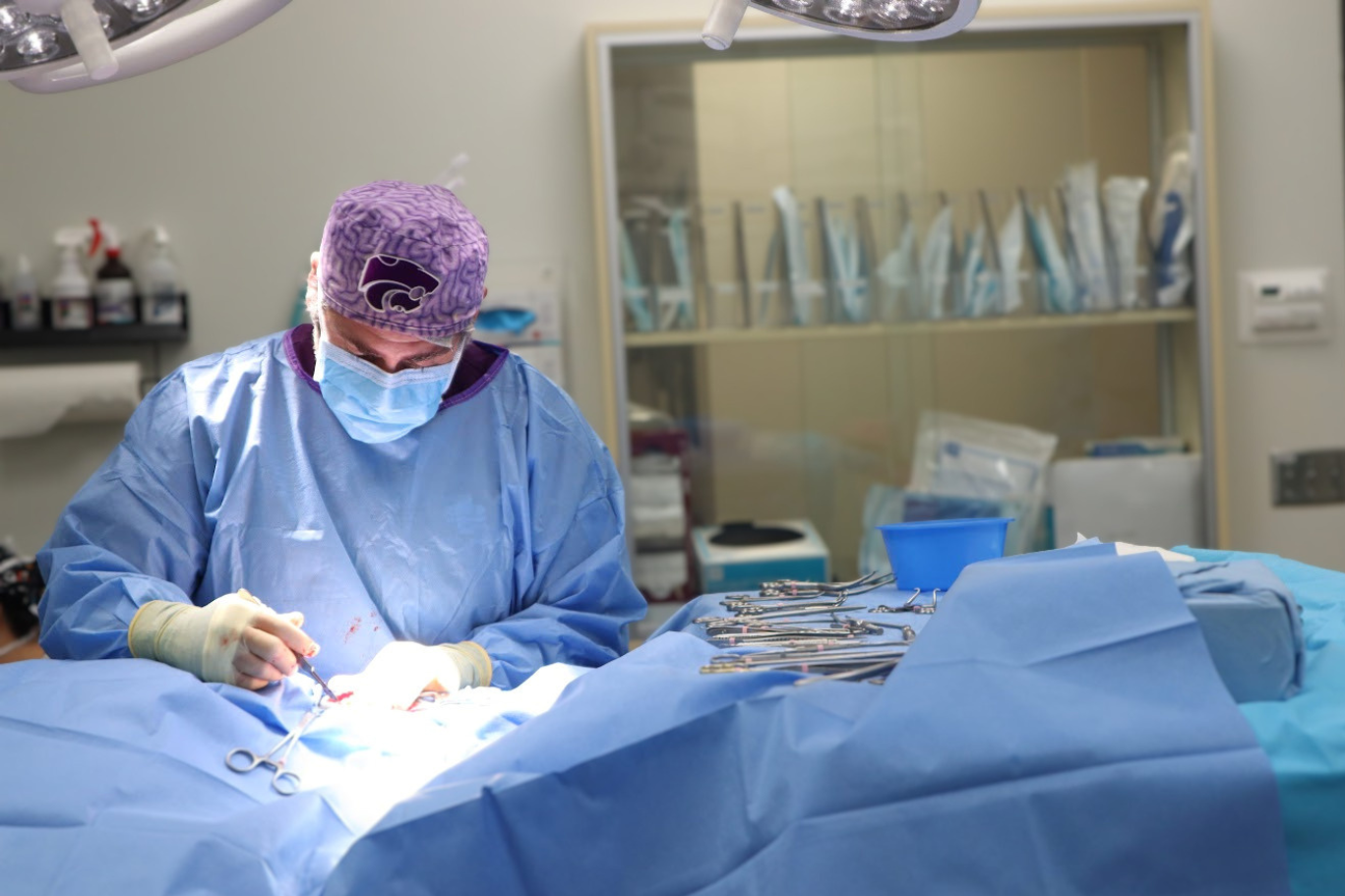
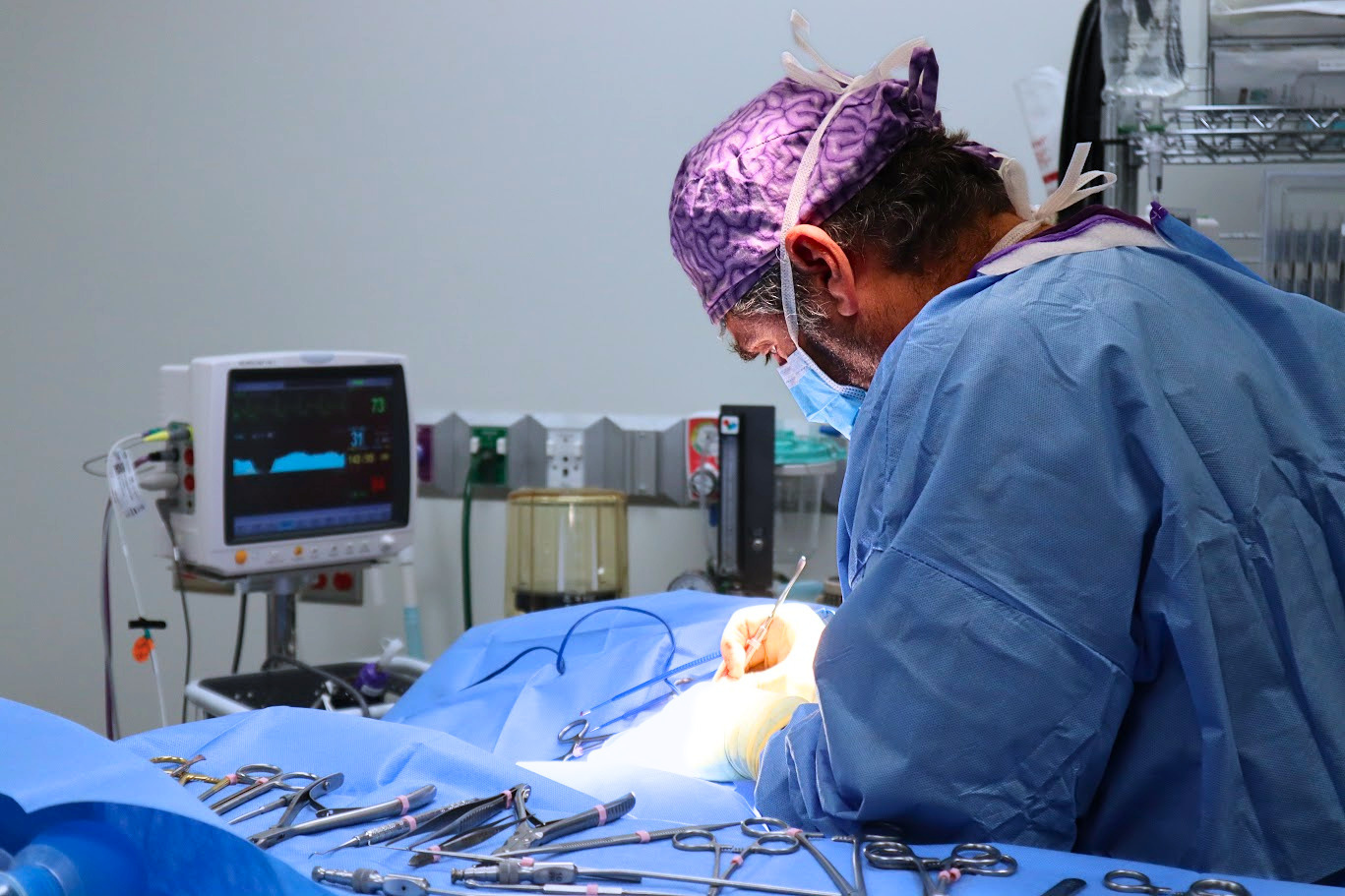
Veterinary Neurosurgery for Dogs and Cats in Kansas City
At Mission Veterinary Emergency & Specialty, our board-certified veterinary neurologist, Dr. David Weinstein, provides advanced neurosurgical care for dogs and cats in the Kansas City area, using specialized surgical techniques to treat complex brain and spinal conditions, relieve pain, and improve mobility and quality of life.
Hemilaminectomy (IVDD Surgery): Removes a portion of the vertebra to relieve spinal cord compression, commonly caused by intervertebral disc disease (IVDD).
Ventral Slot Surgery: Relieves spinal cord compression in the neck, often caused by a herniated cervical disc.
Dorsal Laminectomy: Removes part of the vertebral bone to relieve pressure on the spinal cord or nerves.
Spinal Stabilization Surgery: Stabilizes unstable vertebrae caused by fractures, dislocations, or certain spinal conditions.
Brain Tumor Removal (Craniotomy): Surgically accesses the brain to remove or biopsy certain tumors or abnormalities.
Lumbosacral Decompression: Relieves nerve compression in the lower spine, often associated with degenerative lumbosacral stenosis.
Atlantoaxial Stabilization: Corrects instability between the first two cervical vertebrae, which can cause spinal cord compression.

In-House Diagnostics
At Mission Veterinary Emergency & Specialty, our board-certified veterinary neurologist, Dr. David Weinstein, utilizes advanced diagnostic imaging and specialized neurological testing to identify conditions affecting the brain, spinal cord, and nervous system. Through comprehensive evaluations and precise diagnostics, our team can develop individualized treatment plans for dogs and cats experiencing neurological symptoms.
Neurological Examinations
Magnetic Resonance Imaging (MRI)
Computed Tomography (CT)
Cerebrospinal Fluid (CSF) Analysis
Bloodwork & Laboratory Testing
Frequently Asked Questions
Will my pet need an MRI or other advanced neurological imaging?
Not every pet requires advanced imaging. Following a comprehensive neurological examination, Dr. David Weinstein will evaluate your pet’s condition and recommend appropriate diagnostic testing. Depending on your pet’s symptoms and medical history, advanced imaging, such as an MRI or CT, may be recommended to help identify neurological conditions affecting the brain or spinal cord.
What happens if my pet needs neurosurgery or another neurological procedure?
If your pet requires neurosurgery or an advanced neurological procedure, Dr. Weinstein will develop an individualized treatment plan based on their diagnosis and condition. Because neurological conditions can change and shift over time, an MRI or CT is required on the day of the procedure to provide the most current imaging and help guide accurate surgical planning.
Does my pet need to fast before a veterinary neurology appointment?
Yes. We recommend fasting your pet before their neurology consultation in case advanced diagnostics, imaging, or procedures requiring anesthesia are recommended. Arriving with your pet appropriately fasted may allow our team to proceed with necessary testing during the same visit, potentially reducing the need for additional appointments. Please contact our Neurology team for specific fasting instructions, particularly if your pet has underlying medical conditions or requires medication.
What payment options are available for veterinary neurology services?
Mission Veterinary Emergency & Specialty accepts standard forms of payment, pet insurance, CareCredit, and Scratchpay. Our team can discuss available payment options and provide an estimate for recommended neurological diagnostics, treatments, or procedures.
Do I need a referral to schedule a veterinary neurology appointment?
No, a referral is not required to schedule a neurology consultation. If your primary veterinarian has recommended that you see a veterinary neurologist, we encourage you to contact our team directly (913-722-5566) to schedule an appointment as soon as possible. Once your appointment is scheduled, our team will coordinate with your primary veterinarian to obtain your pet’s medical records, ensuring our neurology team has the information needed to prepare for your pet’s visit.

Meet Our Neurologist

David Weinstein
Veterinary Specialist DVM, DAVCIM (Neurology)
David Weinstein
Veterinary Specialist DVM, DAVCIM (Neurology)