Understanding Screw Tail in Dogs: Bruce’s Journey Through High Caudectomy Surgery
May 18, 2026 · Case Study

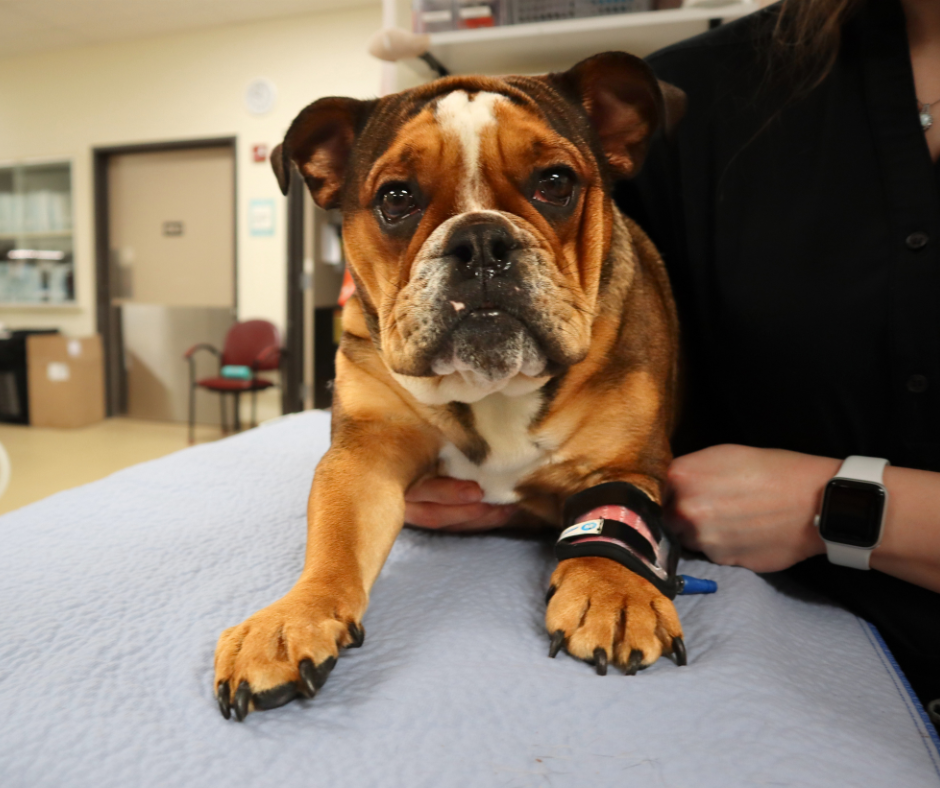
For many brachycephalic dogs, that signature curled tail may look cute, but beneath the skin folds can hide chronic pain, infection, and significant discomfort. This was the case for Bruce, a 1.5-year-old English Bulldog, recently treated for severe screw tail disease with a high caudectomy procedure performed by attending surgeon, Dr. Annie Marquiss.
Bruce’s case highlights not only how debilitating screw tail can become, but also the importance of advanced surgical and anesthesia support for brachycephalic patients undergoing surgery.
What Is Screw Tail?
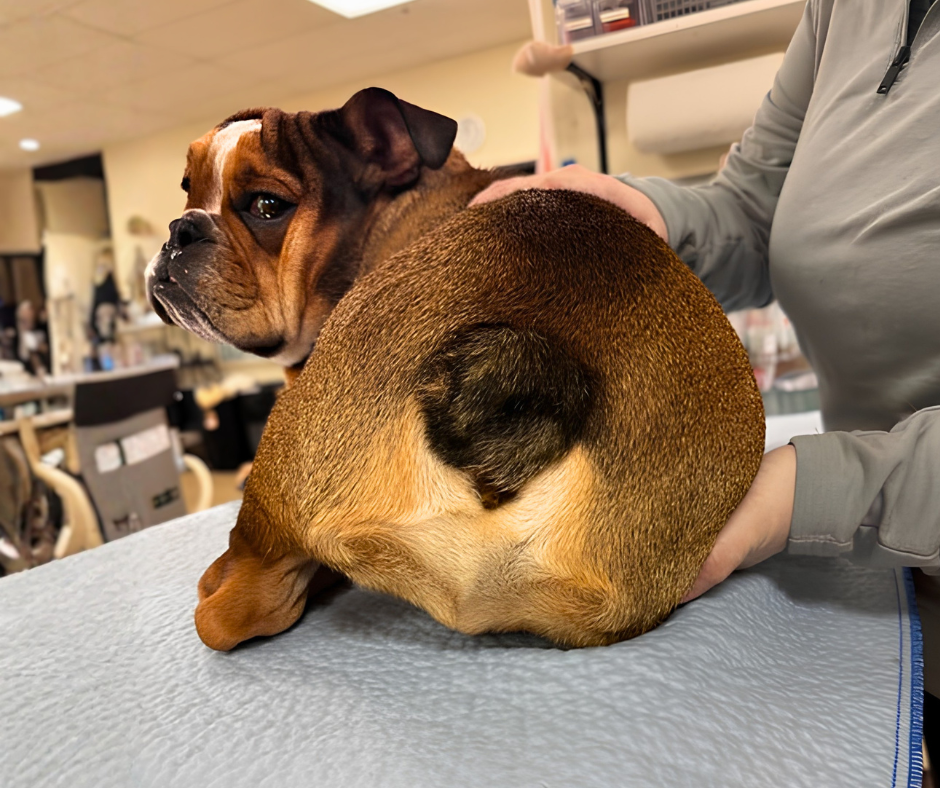
“Screw tail,” also called corkscrew tail or ingrown tail, is a congenital deformity most commonly seen in
brachycephalic breeds. The vertebrae of the tail are abnormally shaped or fused together, causing the tail to curl tightly inward against the body. While the appearance may seem harmless, the abnormal tail structure creates deep skin folds around the tail base that trap moisture, bacteria, debris, and fecal material.
Over time, this can lead to chronic inflammation, painful infections, ulceration, and severe discomfort. In some dogs, the tail becomes so tightly tucked that routine cleaning becomes nearly impossible, creating a continuous cycle of irritation and infection.
How Does Screw Tail Affect Dogs?
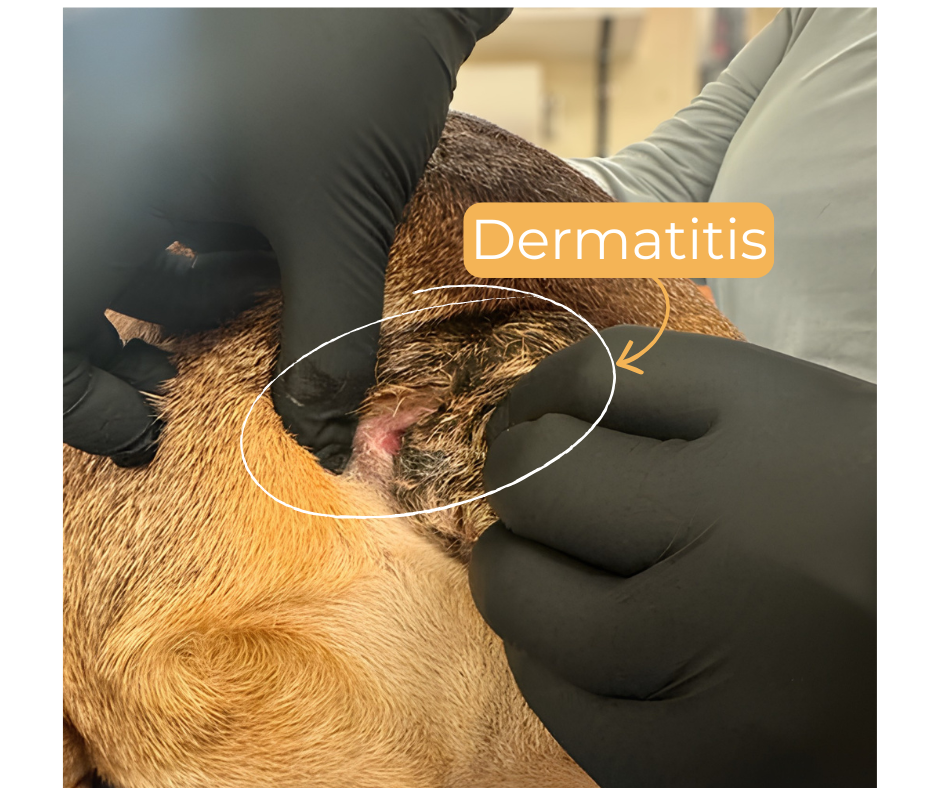
Screw tail is far more than a cosmetic issue. For affected dogs, the condition can significantly impact daily comfort and quality of life.
When Bruce presented to our Surgery service, he had been dealing with infections in the folds of skin around his tail for at least 6 weeks. Despite ongoing treatment with multiple oral antibiotics, topical medications, and medicated wipes, the area remained inflamed, ulcerated, and malodorous. His owners also noticed that he appeared uncomfortable around his tail region.
On examination, Bruce was diagnosed with screw tail accompanied by moderate surrounding moist dermatitis. He was also experiencing concurrent ear infections, another issue commonly seen in brachycephalic breeds due to their predisposition to skin-fold inflammation and chronic moisture retention.
Cases like Bruce’s demonstrate why medical management alone is often only temporarily successful in moderate to severe screw tail disease. Because the issue is structural, many dogs continue to experience recurrent infections and discomfort until the abnormal anatomy is surgically corrected.
Dog Breeds That More Commonly Develop Screw Tail
Screw tail is most commonly seen in brachycephalic (“short-nosed”) breeds, including:
English Bulldogs
French Bulldogs
Pugs
Boston Terriers
English Bulldogs are particularly predisposed due to the breed’s tightly curled tail conformation.
These breeds are also at increased anesthetic risk due to the airway abnormalities associated with Brachycephalic Obstructive Airway Syndrome (BOAS), making specialized anesthesia care especially important during surgical procedures.
Bruce’s Procedure: High Caudectomy
After evaluation by Dr. Annie Marquiss and the Surgery team, a high caudectomy was recommended for Bruce. A high caudectomy is a surgical tail amputation performed near the base of the tail to remove the malformed vertebrae and chronically diseased surrounding tissue. The goal of surgery is not cosmetic; it is to eliminate the painful folds causing chronic inflammation, ulceration, odor, and infection.
During Bruce’s procedure, the surgery team successfully removed the abnormal tail and surrounding diseased tissue. Following surgery, Dr. Marquiss reported that Bruce did very well during the procedure and that the area closed nicely. He remained hospitalized overnight so the team could continue monitoring his comfort level and recovery from anesthesia before discharge the following day.
Specialized Anesthesia Support for Bruce
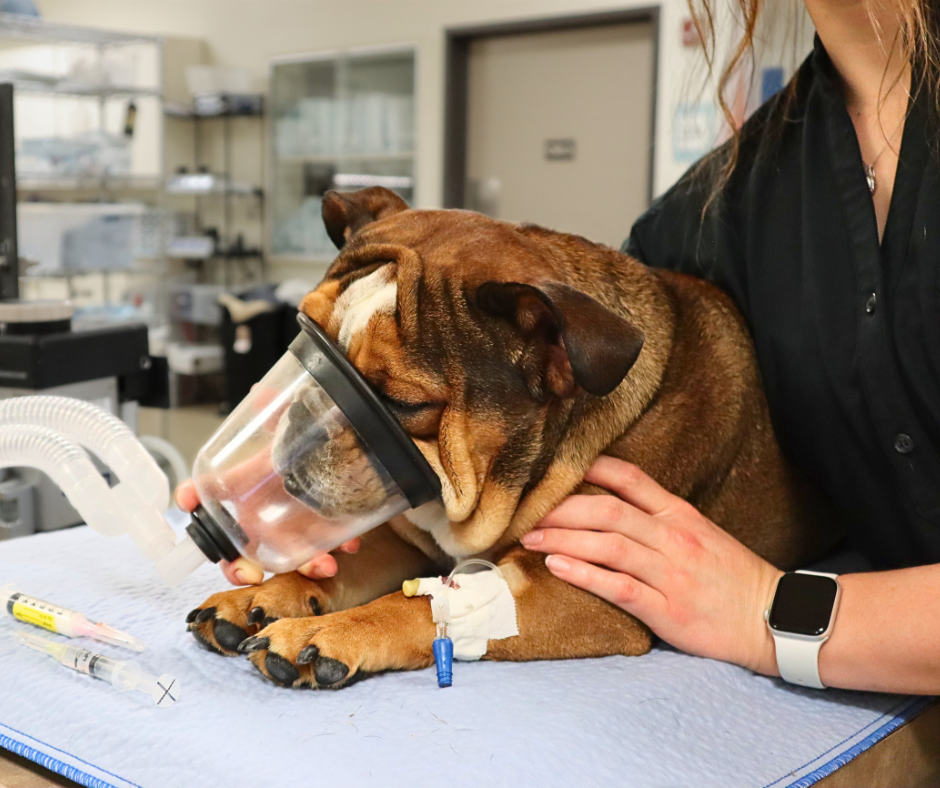
Because Bruce is brachycephalic, anesthesia planning and monitoring were an especially important part of his care.
Brachycephalic dogs often have narrowed nostrils, elongated soft palates, narrowed airways, and increased risk of airway obstruction, regurgitation, hypoventilation, and oxygenation challenges during anesthesia and recovery. Even routine procedures can require advanced anesthetic planning in these patients.
Bruce’s anesthesia care was overseen by board-certified anesthesiologist Dr. Charlotte Marquis alongside anesthesia-trained and certified veterinary technicians Jess and Hailey, who provided continuous anesthetic monitoring and perioperative support throughout the procedure.
Prior to surgery, Bruce underwent pre-anesthetic bloodwork, which was within normal limits. His anesthetic plan was carefully tailored to address the unique concerns associated with brachycephalic patients, including risks for hypotension, hypothermia, hypoventilation, hypoxemia, regurgitation, and pain management needs.
His protocol included medications to help reduce nausea and regurgitation risk before induction, followed by induction with propofol and ketamine and maintenance with inhaled isoflurane anesthesia. Bruce also received a continuous rate infusion of metoclopramide during anesthesia to support gastrointestinal motility and reduce the risk of regurgitation.
For pain control, Bruce received a lumbosacral epidural using preservative-free morphine and bupivacaine to provide advanced perioperative analgesia and improve comfort during recovery.
Fortunately, Bruce’s anesthetic event was smooth and uneventful, with no major complications and a quiet, comfortable recovery.
For brachycephalic patients like Bruce, this level of specialized anesthetic oversight can make a tremendous difference in both surgical safety and postoperative recovery.
Recovery and Life After Surgery
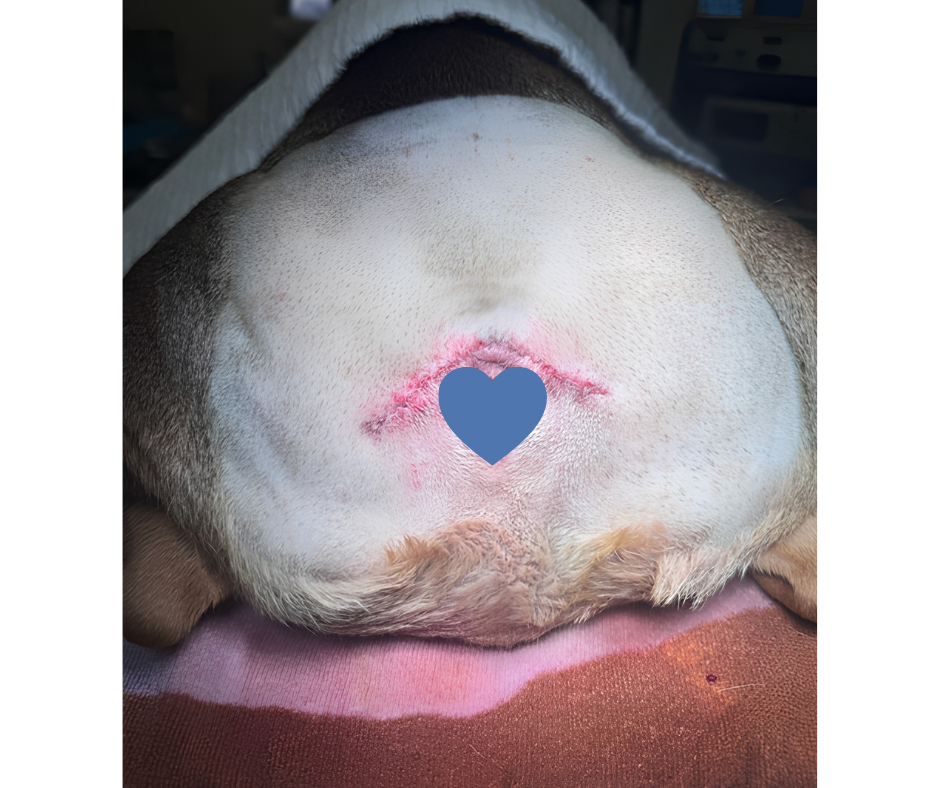
Recovery following high caudectomy is generally very manageable for most patients. Dogs are typically discharged with pain medications, activity restrictions, and an E-collar to protect the surgical site during healing.
Although healing takes several weeks, many owners notice improvement in comfort much sooner. Once the painful, chronically inflamed tail folds are removed, many dogs experience dramatic improvements in mobility, hygiene, and overall quality of life.
For Bruce, the goal was simple: eliminate the chronic discomfort and irritation that had been affecting his daily life and allow him to move forward more comfortably without the constant cycle of infection and inflammation.
Why Early Intervention Matters
Because screw tail is a structural problem, conservative management may only provide temporary relief in moderate to severe cases. Early surgical intervention can help prevent months, or even years, of chronic discomfort, recurrent infection, and skin damage.
Bruce’s case is an excellent example of how collaborative specialty care, including surgery and advanced anesthesia support, can dramatically improve the quality of life for brachycephalic patients with screw tail disease.
